
Democrats Restrict 2nd Amendment Rights With New Law
The Supreme Court heard oral arguments Tuesday in a case that could gut another chunk of unconstitutional gun control. And the conservative justices weren’t subtle about where they stand.
Justice Samuel Alito told Hawaii’s attorney directly that the state was “relegating the Second Amendment to second-class status.” Chief Justice John Roberts called it treating gun rights as a “disfavored right.” Justice Brett Kavanaugh cut straight to the legal heart: “Here there is no sufficient history supporting the regulation, end of case.”
End of case. That’s not judicial hedging. That’s a justice signaling how he plans to vote.
The Hawaii Law
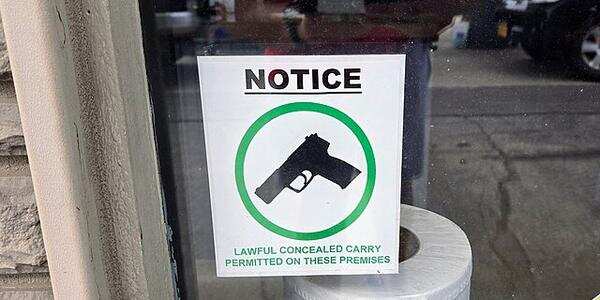
The gun control at issue bars even licensed concealed carry holders from carrying on private property that’s open to the public—unless they first get permission from the landowner.
Think about what that means practically. You have a license. You passed the background checks. The state has already approved you to carry concealed. But you still can’t carry into a shopping mall, a restaurant, or any other private business without first tracking down the property owner and getting explicit permission.
It’s designed to make legal carry functionally impossible. You can have the right on paper while being unable to exercise it in reality. That’s exactly what the conservative justices called out—treating the Second Amendment as lesser than every other constitutional protection.
The Black Codes Defense
Here’s where it gets truly absurd.
Justice Ketanji Brown Jackson argued that “Black Codes”—the post-Civil War laws designed to disarm freed slaves and keep them vulnerable to the Ku Klux Klan—offer historical precedent for Hawaii’s gun control.
Let that sink in. A sitting Supreme Court justice cited laws explicitly created to oppress Black Americans as justification for modern gun restrictions.
Justices Gorsuch and Alito objected immediately. Alito called it the “height of irony” to use laws meant to disenfranchise freed slaves as precedent for taking guns away from citizens today.
Jackson then admitted the Black Codes were “unconstitutional.” So her own cited precedent… was unconstitutional. That’s the best argument gun controllers have—pointing to racist laws that everyone agrees violated the Constitution.
The Historical Test
Since the Bruen decision, courts must evaluate gun laws against historical tradition. If there’s no historical precedent for a restriction, it fails. Kavanaugh’s comment—”no sufficient history supporting the regulation, end of case”—applies that standard directly.
Hawaii can’t find legitimate historical support for its law. The best they could do was point to racist codes designed to oppress an entire race of Americans. When that’s your legal argument, you’ve already lost.
The Bigger Picture
The Fourth Circuit struck down a similar Maryland gun control the same day. The legal walls are closing in on states that have treated the Second Amendment as a suggestion rather than a right.
Hawaii, California, New York, New Jersey—these states have built elaborate regulatory structures designed to make gun ownership as difficult as possible. They require permits, then make permits nearly impossible to get. They allow carry, then restrict where you can carry to the point of meaninglessness.
The Supreme Court’s conservative majority isn’t buying it anymore. “Second-class status.” “Disfavored right.” “End of case.” That’s the language of justices ready to strike down another unconstitutional restriction.
What Comes Next
The case is Wolford v. Lopez. Based on the oral arguments, Hawaii’s law is in serious trouble. The conservative justices made clear they see through the regulatory games states play to nullify constitutional rights.
And Justice Jackson’s attempt to defend gun control by citing Black Codes? That moment will live in Second Amendment history as a perfect illustration of how desperate the anti-gun legal arguments have become.
When your best precedent is admittedly unconstitutional racist oppression, you don’t have a legal argument. You have an ideology looking for justification.
The Supreme Court appears ready to remind Hawaii—and every other state playing these games—that the Second Amendment means what it says.